May 6, 2026, 10:02 pm

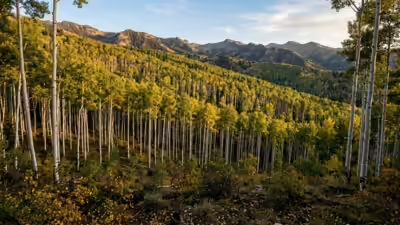
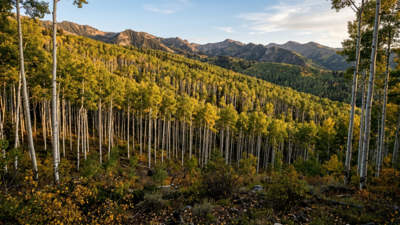
There is a forest somewhere in central Utah. Only it’s not really a forest. It looks like one thousand white-bark aspens shimmering across a hillside in Fishlake National Forest, but walk through it, and you are walking through a single living organism, technically. Each trunk, each branch, each leaf quivering, is one root system. One identity. One life.That organism is Pando, and it may be the most extraordinary living thing in the US.One root, 40,000 treesPando is a clonal colony, a single tree-like organism that shoots up more than 40,000 stems from one sprawling root system. The stems look like individual trees, but they’re all connected underground, all genetically identical, all part of the same body. Pando is a Latin word for “I spread,” which seems like a perfect description when you see what you’re looking at.Pando spans some 106 acres and weighs some 13 million pounds, easily making it among the largest and heaviest living things ever recorded. It is thought that the roots of this tree took hold at the end of the last Ice Age, meaning that this one organism has lived, in silence, through thousands of years of climate change, wildfires and shifting landscapes.Most people, if they stumbled upon Pando unknowingly, would see a pretty stand of aspens and move on. The gap between appearance and reality is part of what makes the place so strange and so worth our attention.Why a ‘forest of one’ changes your view of natureThe Utah Historical Society has a phrase for Pando: a forest of one. It’s a good phrase because the contradiction is right in it. A forest suggests many. One means a single body. Pando is both at the same time.It’s not like this sort of clonal growth is unique to nature; strawberries do it, grasses do it, but Pando takes the concept to a scale that really messes with your sense of what an individual organism is. Pando is here to upend that notion over 106 acres if you think that one organism means one body.This is not a fun fact for scientists and ecologists only. It’s a glimpse into how plants can endure through deep time, not by constantly growing up, but by renewing themselves from roots, sending up new stems while the ancient network persists below.
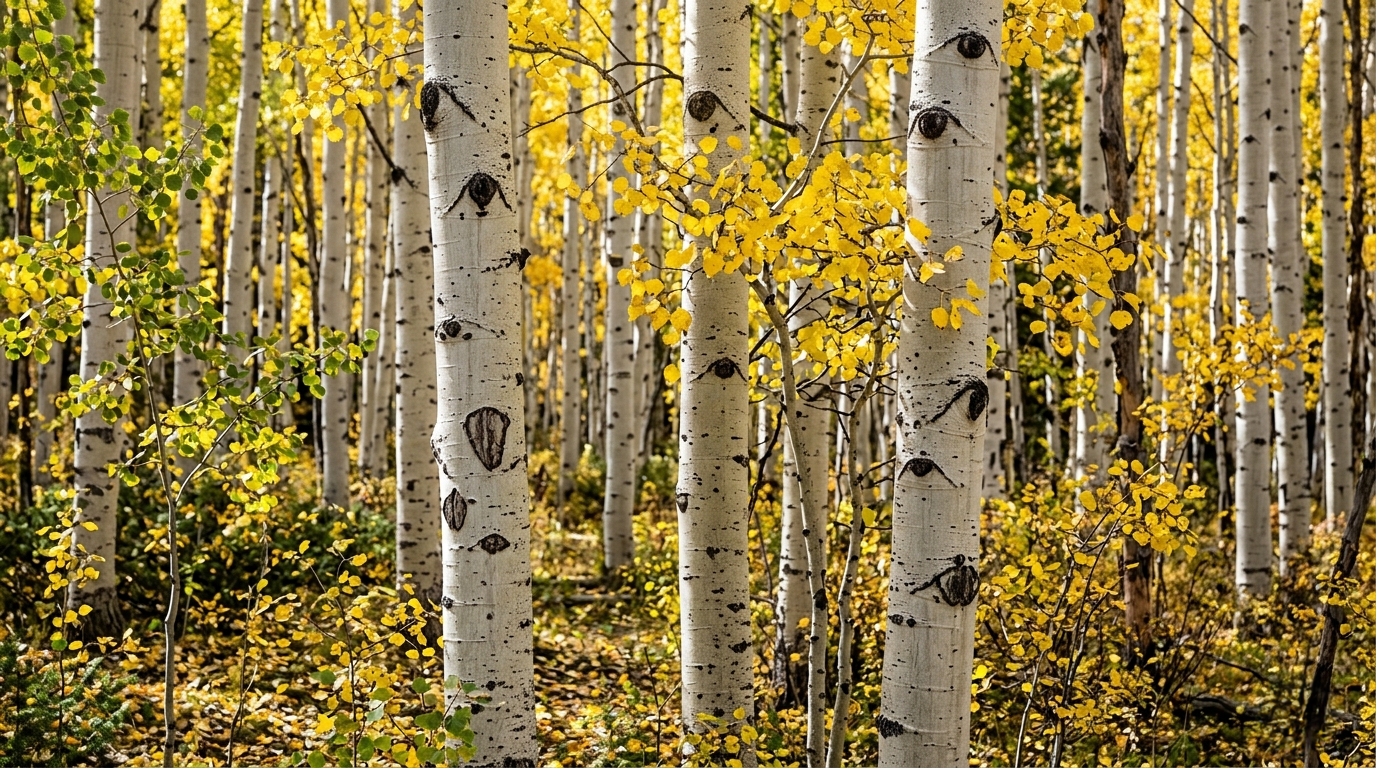
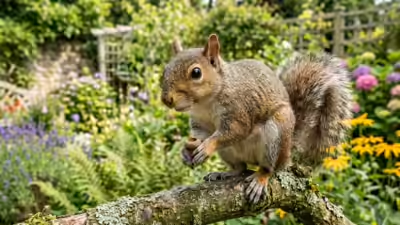
Pando’s thousands of white-barked aspen stems share a single genetic identity and a single root system beneath the soil of Fishlake National Forest in Utah. Image Credits: Google Gemini
The bit nobody wants to talk aboutHere is where the story gets harder. Pando is struggling.A study published in the journal Conservation Science and Practice says the grove’s ability to regenerate is compromised by overabundant browsers such as deer and elk grazing on young shoots, and that the dominant ecological concern is an inverse relationship between recruitment success and browse pressure. They eat the young stems before they can grow old. Old stems die without replacement. Eventually, the math no longer add up in Pando’s favour.The same study also found that, without consistent protection from herbivores, the clone is essentially fragmenting, splitting into ecologically distinct pieces depending on which areas have been fenced off from grazing and which haven’t. The organism that has been together for thousands of years is actually falling apart.This is not a theoretical matter of preservation. It is happening now, in a real place, and the decisions being made about fencing, grazing management and land use in Fishlake National Forest will determine whether Pando survives in any meaningful form.What Pando asks of usIn Pando, scale, age and ecological vulnerability collide. It’s old enough to be a legend. It is large enough to alter what a single organism can be, and it is fragile enough to remind us that longevity is not eternity.Pando is a useful corrective for a US audience accustomed to thinking of national parks and forests as protected by default. Protection requires active work. It requires ongoing management, political will and public interest. A grove that survived the Ice Age can still be lost on our watch if we’re not paying attention.The most quietly radical thing about Pando is not its size. It’s how it folds the distance between a forest and a single life. Once you learn that, you can’t really look at a stand of aspens the same. That shift in perspective, from many to one, is the beginning of caring about what happens next.