
May 6, 2026, 8:23 pm


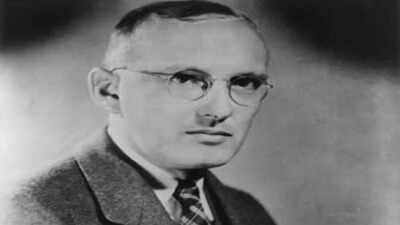
Simple engineering tasks often lead to massive discoveries. This was the case for the engineer Karl Jansky. He was employed at Bell Telephone Laboratories in New Jersey in 1933 to ascertain the source of radio interference affecting long-distance communication.As part of accomplishing this mission, Jansky constructed a large rotating antenna, which helped identify the direction of the interference as it moved across the sky. The purpose of this research project was relatively straightforward. He sought to isolate and minimise the static in long-distance communication. But the discovery made by Jansky even proved to surpass his initial purposes.Existence of an abnormal signal other than solar interferenceWhile making observations, Jansky detected a very strange hissing sound that could not be ignored. At first, he considered it a consequence of various sources of interference, natural or manmade. However, the signal detected was quite unique in nature.First and foremost, it had periodicity. The characteristic hiss showed a recurring pattern after every 23 hours and 56 minutes. This is known as a sidereal period.Jansky wrote about this phenomenon of static noise in his 1933 paper featured in Nature and reported that the signal seemed to emanate from an apparently fixed source. It indicated that the source wasn’t originating from within the Earth or even from the Sun.Determining the origin of the Milky Way GalaxyAs he made additional observations, Jansky determined that the point where the highest amount of radio emissions originated was the direction of the Sagittarius constellation, which resides close to the centre of our Milky Way galaxy.Later, when the findings were published in another study by Nature, they indicated the origin in the Milky Way galaxy, with no contributions from the Sun to the detected radiation. The Milky Way had never been observed to emit any radio wave signals until then. It was believed to be a quiet space.
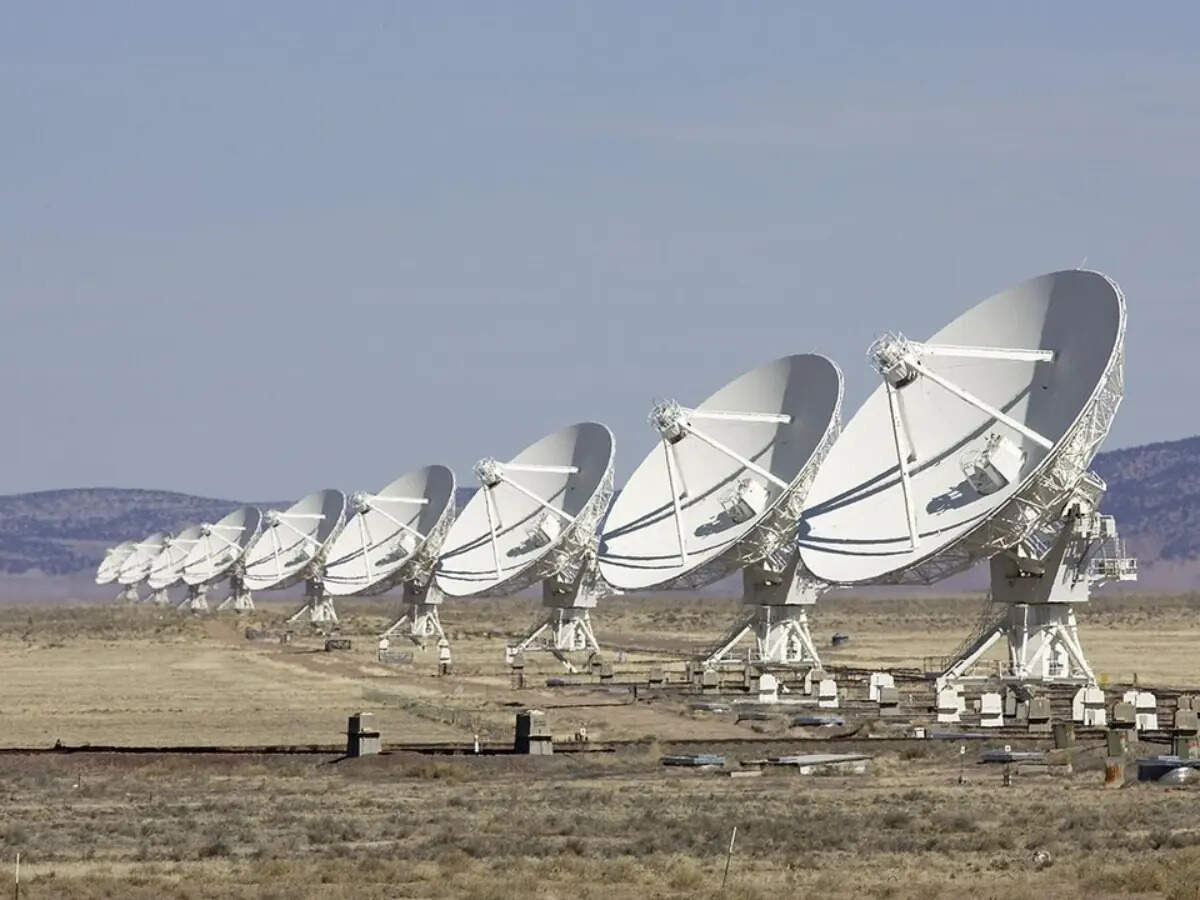
How a strange signal revealed the Milky Way. Image credit – Wikimedia
Importance of the discoveryPrior to Jansky’s research, astronomy had been done solely with visible light. Telescopes made images and recorded information about celestial objects based only on visual observation.Jansky’s discovery paved the way for the exploration of outer space using a completely new method. It made it clear that all celestial bodies radiate energy in the form of radio waves. As NASA notes, this discovery showed that stars and other cosmic objects emit radio waves, which can be observed from Earth.From noise to the discovery of radio astronomyOne of the key features of Jansky’s discovery was the attitude toward the mysterious signal. The scientist did not treat it as useless noise. Instead, they studied the signal closely and tried to find its pattern.Scientists who study the history of science consider this event an example of discovery through observation. As explained by the National Radio Astronomy Observatory, Jansky’s discovery is seen as the starting point of radio astronomy as a science. His approach proved that even a useless signal can contain something important.Jansky’s discovery was at first met with no recognition. Other scientists, however, later used his findings. The reason why radio telescopes were built is related to the need to examine the sky more accurately. Such devices discovered those objects which cannot be seen with optical telescopes, such as pulsars, quasars, or cosmic microwave background radiation.The research by NASA’s Cosmic Times project reveals how Jansky’s discoveries led scientists make further discoveries over many decades in the area of astrophysics. At present, radio astronomy is one of the key spheres of space sciences.A discovery that changed science foreverIn the modern era of astronomy, scientists use various methods of observation, including radio, infrared, and X-ray. Jansky’s discovery became a base for numerous developments in cosmological studies.This discovery is crucial because it reflects the principles of any other scientific discovery.