May 6, 2026, 8:22 pm

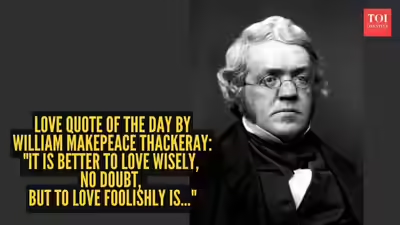
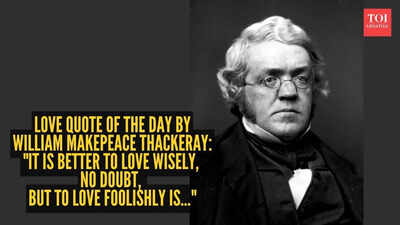
Victorian novelist William Makepeace Thackeray wrote in ‘Vanity Fair’, “It is better to love wisely, no doubt: but to love foolishly is better than not to be able to love at all.” The line feels like a warm advice from a friend, and rightly so!On the surface, it’s a simple line. Sure, we’d all prefer to be the “wise” lover who never misses a red flag and always sets perfect boundaries in relationships. But Thackeray is reminding us that even the messy, impulsive, and slightly embarrassing versions of love are better than the alternative of not feeling love ever. It’s a quiet nudge to stop being so afraid of making a mistake that we often forget to feel.
The logic of “Wise” vs. “Foolish” love
Let’s be real: “wise” love is the gold standard. It’s the kind of relationship built on shared values, healthy communication, and emotional maturity. It’s safe, it’s sustainable, and it makes sense on paper. But Thackeray wasn’t just writing for the people who have it all figured out. He was acknowledging the “fools”—the ones who take a leap of faith when their brain is screaming “no,” or who give a second chance to love when logic says to run away. While “wise” love keeps your life orderly, “foolish” love is often what makes your life feel alive. It’s raw, it’s clumsy, and it’s deeply human. Choosing to feel, even when it’s “wrong,” is proof that you aren’t a robot.
We often treat the word “foolish” as an insult, but in the world of the heart, it’s actually a badge of courage. To love foolishly is to intentionally drop your emotional wall. You’re saying, “I know I might get hurt, and I know this might not end in a fairy tale, but I’m going to try anyway.” That’s not weakness; it’s a rejection of emotional self-protection. Most people who avoid “foolish” love aren’t actually wiser—they’re just more afraid to live life to the fullest. They’d rather stay behind their fortress walls than risk a bruise. Thackeray says that a heart with a few scars from a foolish choice is far more valuable than a pristine heart that has never been used.

There is a hidden risk in trying to be too wise in love. When you approach relationships with a logical mentality— like calculating every risk and over-analysing everything you do— you can accidentally become emotionally detached. You might successfully avoid the heartbreak, the messy arguments, and the awkward endings, but you’ll also miss out on the spontaneous magic. By building a castle that no one can break into, you end up sitting in it alone. You save yourself from the rain, sure, but you also never get to see the sun. Being “too wise” can turn your life into a very safe, very quiet, and ultimately very empty place where nothing ever grows.
Thackeray isn’t telling you to be a doormat or to ignore your intuition until you’re miserable. He’s suggesting a balance. You can be “wise” by maintaining your boundaries and respecting yourself, while still being “foolish” enough to let people love you. True maturity isn’t about the absence of messy feelings; it’s about having the strength to feel them and still choose to be kind. The saddest stories aren’t the ones that end in a “foolish” heartbreak. They are the ones that never even started because someone was too scared to look silly or get hurt.If you’ve ever looked back at a past relationship and thought, “I was a fool,” don’t be so hard on yourself. That “foolishness” was actually your humanity showing up in full form. It means you’re capable of loving, and in Thackeray’s eyes, that’s the greatest win of all.