April 30, 2026, 2:34 pm

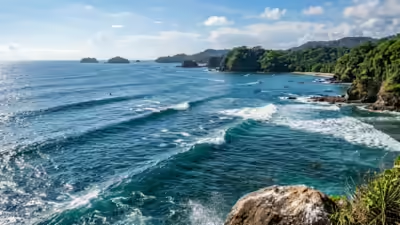
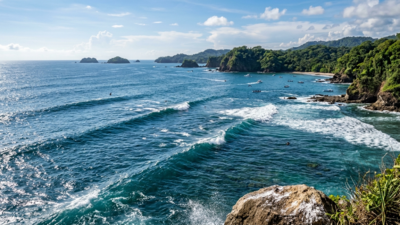
Picture this: every winter, like clockwork, cold winds sweep across Central America, stirring up the Pacific Ocean off the coast of Panama. That stirring pulls up cold, nutrient-rich water from the depths, a process called upwelling, and everything that depends on it flourishes. Fish numbers are booming. Coral reefs get a break from the heat. It protects the livelihoods of local coastal fishing communities, many of which have depended on these waters for generations.Without fail, for at least 40 years running, this is what has happened. Until 2025.Scientists watched and waited through the dry season from December through April. The winds came, but something in the system did not respond as it always had. The cold water didn’t rise. The nutrients did not follow. The upwelling never really took place, for the first time in recorded history for this region.Why this ocean process matters more than you’d thinkThe upwelling in the Gulf of Panama is not a weather fluke; it is a biological engine. The study, Primary production in the eastern tropical Pacific: A review, pointed out that trade winds in the eastern tropical Pacific are critical in controlling the depth of the thermocline and, therefore, how much nutrient-rich water reaches the surface where sunlight can support marine life. When wind patterns weaken or shift, the ripple effects spread through the food web from phytoplankton to commercial fish stocks, sometimes faster than ecosystems can adapt.This is not a footnote in an obscure oceanography textbook. The upwelling system off Panama is part of the same atmospheric and ocean machinery that keeps the broader eastern Pacific biologically productive and economically vital.Why should Americans care about Panama’s ocean?Good question. Panama is thousands of miles away, but the ocean doesn’t care about borders, and neither do the consequences.At the heart of some of the most biodiverse marine waters in the Eastern Pacific is the Gulf of Panama. The upwelling system there isn’t just good for local fishing communities; it’s part of a huge, interconnected web of ocean climate that affects weather patterns, fish migration routes, and carbon absorption across the hemisphere. If something that’s been stable for 40 years suddenly breaks, it’s the sort of signal that climate scientists treat like a smoke alarm.Imagine the Colorado River drying up or the Great Lakes reaching record lows. These aren’t just regional inconveniences; they’re signs that something much bigger is shifting.
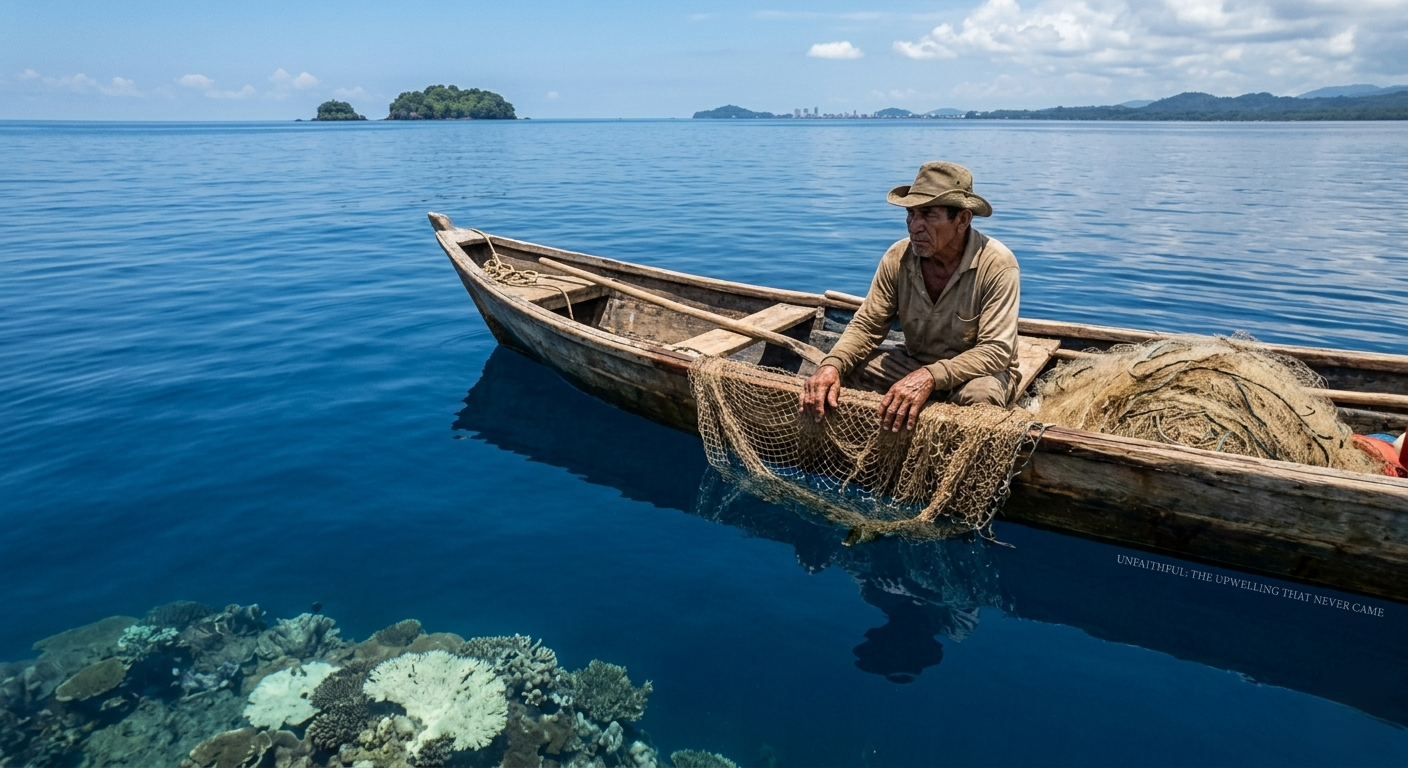
For coastal fishermen, the ocean has always been a promise. Last year, it broke one.Image Credits: Google Gemini
What the science actually saysAccording to a study published in the Proceedings of the National Academy of Sciences (PNAS), researchers at the Smithsonian Tropical Research Institute (STRI), one of the most respected tropical research bodies in the world, believe a dramatic weakening of the trade winds, which normally drive the process, is the likely culprit behind the 2025 upwelling failure. The PNAS study showed that the expected seasonal cooling was much less, and the increase in ocean productivity that usually follows El Niño was lower than predicted.The researchers are quick to point out that more work is needed to determine the precise cause, but the research makes clear that climate disruption is a prime suspect, and the findings are raising urgent questions about how quickly warming can unravel systems that have served coastal economies for millennia.The bigger problem: we’re barely watchingHere’s what’s perhaps most unsettling about this story. The Gulf of Panama upwelling failure was caught largely because STRI has maintained long-term monitoring in the area, a rarity in tropical ocean research.Most of the world’s tropical upwelling systems go largely unmonitored. The PNAS study points this out directly, calling for improved ocean climate observation and forecasting across tropical regions. In plain terms, we got lucky that someone was watching this time. Next time, we might not know until the fish are already gone.This might just be the opening actScientists talk a lot about tipping points, which are thresholds a system can’t easily come back from. We don’t yet know whether 2025 was an anomaly or the start of a new pattern in the Gulf of Panama, but the ending of a 40-year run without warning is, if nothing else, a good reason to pay very close attention.For the fishing communities along the Pacific coast of Panama, 2025 wasn’t an abstract data point. It was a season when the water did not behave the way their parents and grandparents told them it always would. That’s a human story, and one the rest of us might be telling about our own coastlines sooner than we think.