April 23, 2026, 10:19 am

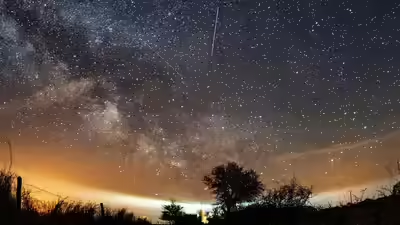
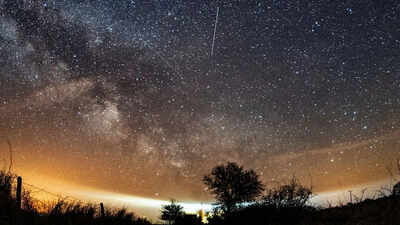
The Lyrids are among the oldest recorded meteor showers, with historical observations dating back more than 2,500 years. The shower remains active from around 16 to 25 April each year, with peak activity typically centred on 22 April. Activity increases gradually, peaks briefly, then declines over several days. No equipment is required to view the display. It takes around 15 to 30 minutes for eyes to adjust fully to darkness, and bright screens or lights can reduce sensitivity during that time.The Lyrids continue to appear for a few nights after the peak, although activity slowly decreases. The event is part of a wider cycle of annual meteor showers that occur throughout the year, each linked to different cometary debris streams passing through Earth’s orbit.
Clear skies are expected over parts of the UK as the Lyrid meteor shower reaches its peak this week. It is one of the regular April sky events that returns every year, often quietly, but still draws attention when weather conditions align. This time, forecasts suggest long stretches of clear skies across several regions, which is not always common for the UK. The Lyrids have been active since mid-April, with the strongest activity expected around the night of 22 April into the early hours of 23 April. Under darker rural skies, faint streaks of light may become visible across the sky, with occasional bursts of increased activity.High pressure is expected to dominate weather conditions during the peak period. That usually brings settled weather and reduced cloud cover. Large areas of England, Wales, Scotland, and Northern Ireland are expected to see mostly clear or partly clear skies overnight. Some cloud may still affect western regions early in the night, especially parts of Northern Ireland and west Wales. Eastern England may also see brief patches of cloud drifting through. Even so, overall conditions are widely considered favourable for sky watching.Temperatures are expected to fall quickly after sunset. Rural areas may feel noticeably cold by late evening. In parts of northern England and Scotland, temperatures could drop close to freezing. It is typical April night weather, but still cold enough to make long viewing sessions more comfortable with warm clothing.
The best viewing period usually begins after 22:00 BST when the sky is fully dark. The early hours after midnight are often recommended, as meteor activity tends to be easier to spot when the sky is quieter and darker.Light pollution remains a key factor. Urban lighting can reduce the visibility of faint meteors significantly. Dark rural locations tend to offer better conditions. Even a short distance away from streetlights can make a noticeable difference.The meteors appear to originate from the constellation Lyra, which rises in the north-eastern sky. Even so, they can appear in any direction. There is no fixed viewing point in the sky required.
The Moon will be a thin crescent during the peak. It remains visible for part of the night, mainly toward the north-western sky, adding some background light. After around 02:00 BST, the Moon sets in many regions, leaving darker skies. This period is often considered the most favourable for observing fainter meteors. Visibility tends to improve once the sky becomes fully dark and steady.
The Lyrid meteor shower happens because the Earth travels through streams of debris produced by the passage of comets or, in certain instances, asteroids. These objects tend to be quite small, often no bigger than a grain of sand. As they encounter the atmosphere of our planet, they burn away from friction with the surrounding gases.This phenomenon results in the appearance of light trails called meteors. A meteor shower will happen if several meteors appear in a relatively short amount of time.Every meteor shower is connected to a particular parent body. For the Lyrids, this parent body happens to be Comet Thatcher. The comet orbits the Sun once every 415 years. Every year, when it comes near Earth, its stream of debris is encountered by Earth. This makes the Lyrids a yearly occurrence.