May 5, 2026, 9:27 am

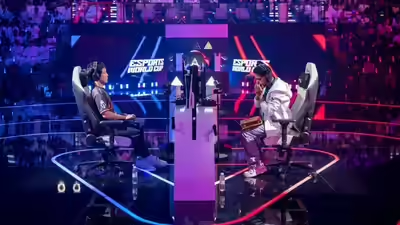
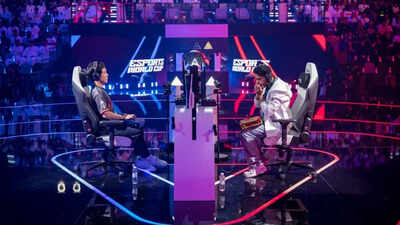
FILE PHOTO: Players competing at EWC 2025 (Photo: S8UL Esports)
Esports, by most metrics, has already arrived. It is global, capital-heavy, and increasingly central to the modern sports-entertainment economy. Countries are building arenas, investors are underwriting leagues, and international events are beginning to mirror the scale of traditional sport.In India, however, esports still lags significantly behind global standards, even as ambition and intent continue to surge.
We haven’t had our moment of ‘83 in esports for India
Animesh Agarwal, CEO & Founder, S8UL Esports
“There needs to be some Indian team or some Indian player that goes out, wins a medal for us or wins a global championship… we haven’t had our moment of ‘83 in esports for India,” Animesh Agarwal, CEO & Founder, S8UL Esports, tells Timesofindia.com. “Some kid needs to go out, a group of kids needs to go out and win it for India, because that is what we are awaiting.”
That search for legitimacy is playing out alongside rapid expansion and increasing global validation. S8UL’s continued inclusion in the Esports Foundation Club Partner Program, alongside another Indian organisation, GodLike, places it among 40 elite global clubs preparing for the Esports World Cup 2026 in Riyadh, a tournament that will feature over 2,000 players, 200 clubs, and a prize pool exceeding INR 700 crore.The program itself offers funding, strategic support, and international exposure, effectively acting as a bridge between domestic ecosystems and global competition. For Agarwal, the shift is both external and internal.“When we applied for EWC, we were like, okay, we are testing grounds… maybe we are running for 2026 or 2027,” he says. “But when we got it, everything became fast-paced. Our plans for three years had to be covered in one year, expanding from one country to eight different countries, from two esports titles to 14 different esports titles.”
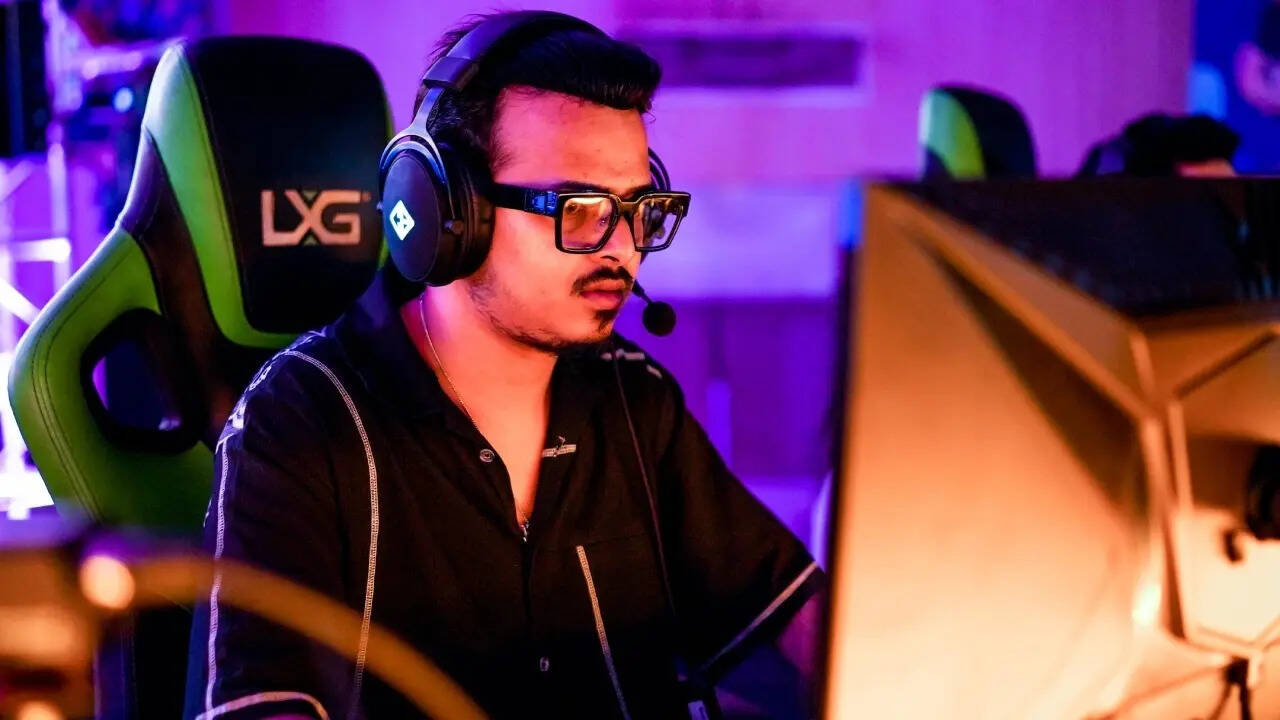
Animesh Agarwal (Photo: S8UL Esports)
The Club Partner Program, which now includes S8UL, has already invested over USD 100 million into organisations since 2023, and that global exposure and capital, Agarwal suggests, could be transformative beyond just the results.“It unlocks seats at tables which are coveted… being part of this club program is a very elite circle,” Agarwal says. “You don’t get to learn more about esports in two months anywhere else. It’s a real check of your foundation.”In many ways, that ‘check’ is where India currently stands. According to industry estimates, India is one of the fastest-growing gaming markets by users, with over 500 million gamers, but it still contributes a disproportionately smaller share of global esports revenues and competitive success.
Back home, the ecosystem is undergoing a different kind of shift. The Promotion and Regulation of Online Gaming (PROG) Act, 2025, and its accompanying 2026 Rules, represent India’s most structured attempt to define the sector. The framework creates a clear distinction between esports and online money gaming, introduces a formal registration mechanism for esports titles, and establishes a central regulatory body – the Online Gaming Authority of India – to oversee classification, compliance, and enforcement.It also mandates user safety features, introduces a two-tier grievance redressal system, and restricts financial systems from enabling prohibited gaming transactions, thus creating guardrails for both users and operators. For Agarwal, that clarity was overdue.“The Promotion and Regulation of Online Gaming Act, 2025 is a positive step forward for Indian esports,” he says. “It brings much-needed structure to the ecosystem and clearly separates esports from online money gaming, helping address long-standing confusion around the space.“For organisations like S8UL, this direction allows us to take a more long-term view – investing in talent, scaling teams, and building globally competitive structures with greater confidence.”Yet, the gap between policy and practice persists.“There are still important gaps,” he adds. “Esports teams and players continue to face a lack of clarity on financial frameworks… There are ongoing challenges in how banks differentiate between esports earnings and real money gaming.“I still face trouble from banking partners when we are getting a prize from a foreign country because they don’t understand esports,” he says. “So before we go to bigger things, there are basic problems.”
If the outside perception of esports is still evolving, the business model behind it is already clear and systematic.“Content remains the foremost driver for any esports team or gamer in India,” Agarwal says. “Followed by sponsorships… and then prize earnings. But, every prize pool on average gets reduced by 50–60 per cent,” he explains. “After taxes and splits… a top team might take home 60–70 odd lakhs. So prize pools don’t really make a big impact.”
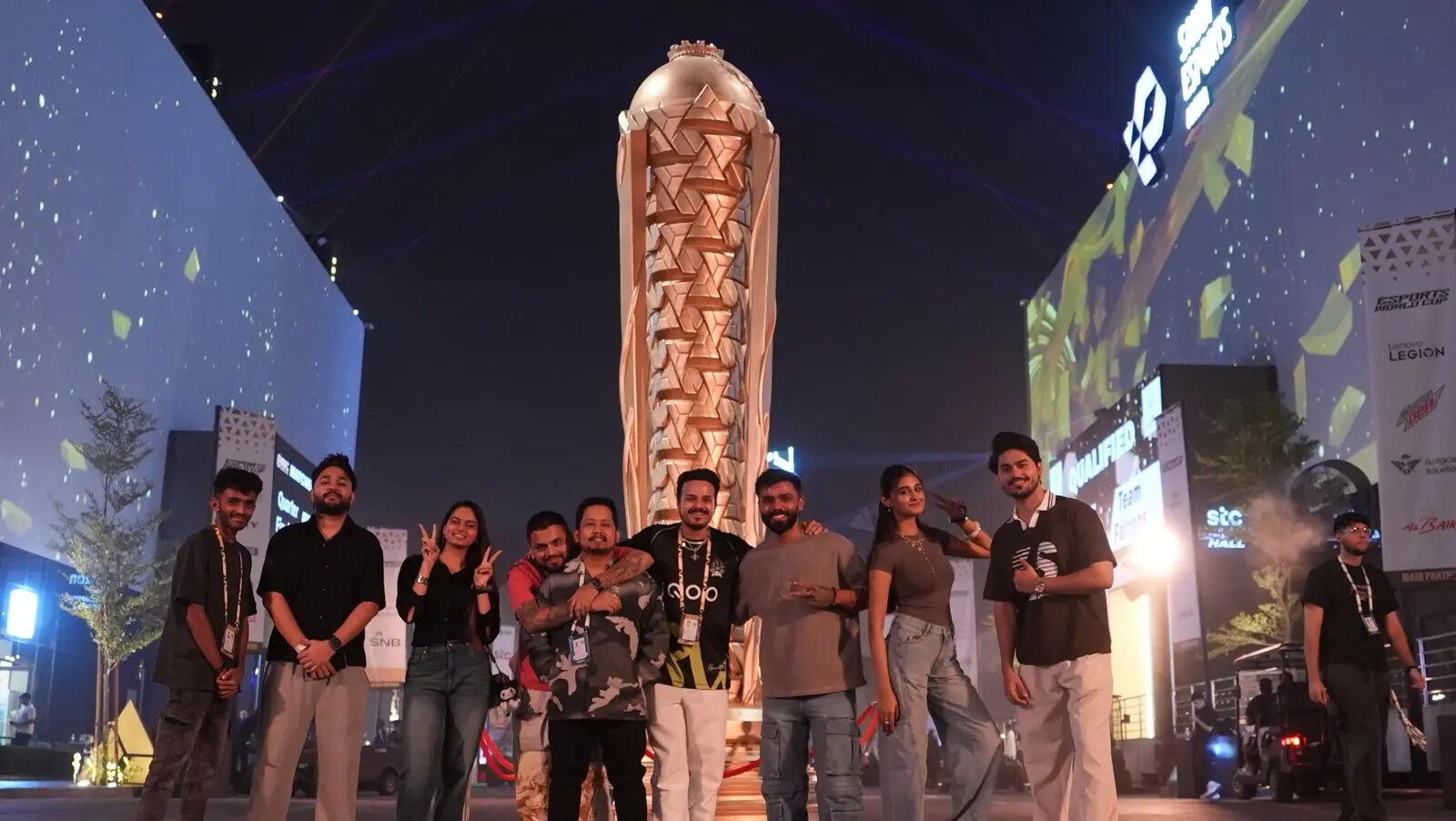
But the real upside lies beyond domestic circuits. “If you exit domestic boundaries and qualify for global events, the prize pools scale exponentially… we are talking of 7x, 8x increase.”That is where global tournaments and programs like EWC become critical to long-term viability.
India’s esports identity is also shaped by accessibility. Affordable smartphones and low data costs powered the first wave of adoption, creating depth in audience but limiting breadth in competitive formats.“We are more than 90% a mobile-first country,” Agarwal says. “And we are talking about the two most popular titles getting banned… so it definitely hampered progress.”That disruption from the ban of titles like PUBG Mobile and Free Fire did more than stall momentum. It also exposed the fragility of an ecosystem heavily dependent on a narrow set of titles.“If you try to go and hunt for PC players… you might find a group of 10 good players,” he says. “But you cannot have a country of 100 where only 10 people are good at one particular game. Gaming PCs today… I don’t see them costing less than 130K–140K,” he adds. “So just imagine how difficult it is going to be for us to transition.”Globally, however, the competitive centre still tilts toward PC and console ecosystems from tactical shooters to Multiplayer Online Battle Arenas (MOBA) where there is infrastructure, hardware access, and long-term training systems. India’s mobile-first tilt, while commercially efficient, has created a disconnect with that global meta.
If I am a guy sitting at home… we don’t have a roadmap of how that person can end up representing India
Animesh Agarwal, CEO & Founder, S8UL Esports
For all its potential, Indian esports lacks a foundational element that traditional sports take for granted: structure.“If I am a guy sitting at home… we don’t have a roadmap of how that person can end up representing India,” Agarwal says. “Everything is happening haphazardly.“In sports, you play district, state, nationals… There is a structure. In esports, there is no correct talent scouting program. There is no structure for how younger talent can make it to the top. There is no clear pathway today to formally register esports teams as entities within a defined structure. Players and organisations still lack comprehensive protections.”
Gaming gave India hundreds of beautiful things, but only the bad things made it to national news
Animesh Agarwal, CEO & Founder, S8UL Esports
If infrastructure is one barrier, perception is another. “Gaming gave India hundreds of beautiful things, but only the bad things made it to national news,” Agarwal says. “If you show something always in a bad way, then the perception is never going to change.“For a very long time, people thought gaming meant fantasy gaming… that has been a big problem. We have had such great moments… but very few made it to national news,” he says. “So it really hinders progress.”
A global trophy. That’s what changes everything
Animesh Agarwal, CEO & Founder, S8UL Esports
In many ways, India’s esports journey resembles its early cricket years – full of promise, short on defining moments. But unlike the past, this ecosystem is now backed by early regulatory clarity, global exposure, and growing institutional support.For Agarwal, the direction is inevitable. “I think it’s not a matter of can,” he says. “Esports will make its way… it will be a matter of must.“A global trophy. That’s what changes everything.”Until then, India’s esports story continues to build across policy, platforms, and global stages, waiting for the result that finally turns potential into proof.