April 29, 2026, 12:53 pm

King Charles III’s historic US speech
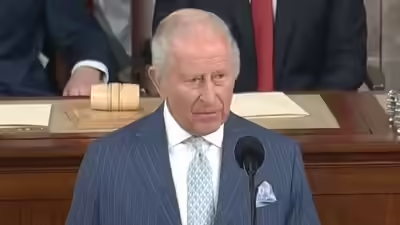
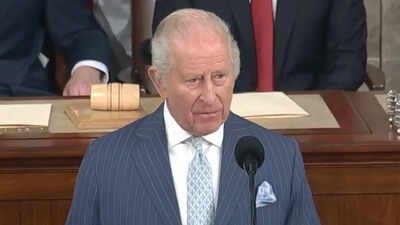
King Charles III’s visit to the United States was about celebrating the 250th anniversary of American independence. This is the King’s first trip to the US as monarch and the first state visit by a British sovereign since 2007.However, the visit also carries significant diplomatic weight, coming at a time when UK-US ties are under strain over Britain’s reluctance to fully support the joint US-Israeli war against Iran.UK Prime Minister Keir Starmer has underlined that Britain will not be drawn into the Iran conflict unless it aligns with national interests, stressing that lessons from the Iraq War continue to shape his approach.Against this backdrop, King Charles delivered a historic joint address to the US Congress, the first by a British monarch since Queen Elizabeth II in 1991.Here are the key takeaways:
The King opened his speech by acknowledging “times of great uncertainty”, citing conflicts in the Middle East and Europe as well as rising political tensions. In a notable line, he said, “we do not always agree”, a candid nod to recent divergences between the two allies.However, on a positive note, he said that the US and UK can achieve outcomes that benefit not just their own citizens, but the wider world.
Referencing the Magna Carta, King Charles highlighted that executive power must remain subject to checks and balances — a foundational principle shared by both nations.The remark drew strong applause, particularly from Democrats, and was widely interpreted as a subtle reminder amid ongoing debates over presidential authority under Donald Trump.
Quoting former US diplomat and security advisor Henry Kissinger, the King highlighted the importance of the transatlantic alliance. He reminded lawmakers that NATO invoked Article 5 only once — after the 9/11 attacks — in defence of the United States.He also called for continued resolve in supporting Ukraine, framing it as part of a shared commitment to global security.
A long-time environmental advocate, King Charles referenced the “disastrously melting ice-caps”, weaving climate concerns into a broader discussion on global security and cooperation.The mention subtly contrasted with US domestic rhetoric favouring expanded fossil fuel production.
One notable absence from the speech was any direct reference to Jeffrey Epstein or his victims, despite ongoing scrutiny and recent revelations involving high-profile figures.The closest the King came was a general remark about supporting victims of societal ills — a line some critics viewed as insufficient.
Despite the weighty themes, the King injected humour throughout his speech. He quoted Oscar Wilde on the US and UK having everything in common “except, of course, language”, and joked he was not in America for a “cunning rearguard action” to restore British rule.The lighter moments appeared to help soften the atmosphere amid underlying tensions.
Apart from the US Congress address, the two heads of state also shared lighter moments during the White House state dinner.King Charles III gave US President Donald Trump a taste of his own medicine when he quipped that without the British, Americans might be speaking French. Referring to Trump’s past remarks about Europe, the King joked: “If it wasn’t for us, you’d be speaking French.”Trump, in turn, made a light-hearted remark about Britain’s royal family, recalling how his mother admired the young King. “My mother had a crush on Charles,” he said, drawing laughter during the exchange.