April 29, 2026, 5:59 pm


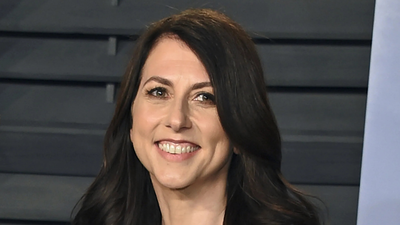
MacKenzie Scott has given away about $26.3 billion to charities since 2019, placing her among the most significant philanthropists of recent years. Yet despite this extraordinary level of giving, she remains one of the richest people in the world. This is because her fortune is still tied mainly to shares in Amazon, which can rise in value even as she gives stock away or sells it. Bloomberg’s Billionaires Index estimated her net worth at $43.6 billion on 28 April 2026, while other estimates have placed it closer to $33 billion. The exact figure varies by tracker, but the broader point is clear: her wealth is built on equity rather than cash, and equity can continue to grow over time.
Scott received roughly a 4% stake in Amazon as part of her 2019 divorce from Jeff Bezos. She was also involved in Amazon’s early development, contributing to business plans and operations, but it was this stake that made her one of the world’s richest individuals.Since then, she has reduced her holdings significantly. She has sold or donated tens of millions of shares and cut her stake by about 40%. Despite this, she still owns tens of millions of shares, which remain the foundation of her wealth.Because Amazon’s stock has risen strongly in recent years, the value of what she still owns has increased. This means that even as she gives away billions, her remaining wealth can continue to grow.
The key to understanding Scott’s finances is that her wealth is not held as cash. It is tied to shares in a company whose value changes with the market.When Amazon’s share price rises, the value of her holdings increases. This is why her net worth can grow even in years when she donates billions. In some periods, gains from the stock market have offset a significant portion of what she has given away.In practical terms, her wealth has not fallen in proportion to her giving because it remains concentrated in Amazon stock, and the stock’s gains can counterbalance large charitable donations.
Scott’s philanthropy is substantial in scale. Through her platform Yield Giving, she has distributed funds to more than 2,700 organisations across education, disaster relief, climate initiatives, and community development.In 2025 alone, she donated about $7.1 billion. Some of her largest recent gifts include:
Many of these rank among the largest single donations in the history of these institutions.
Scott’s approach to giving is distinct because she does not impose strict conditions on how the money should be used.Her donations are typically unrestricted, meaning organisations can decide how to spend the funds. In many cases, recipients are not required to go through lengthy application processes or detailed reporting requirements.This approach allows organisations to respond quickly to urgent needs and has been widely welcomed by recipients. Her low-profile style also means she is not always fully reflected in traditional donor rankings.
MacKenzie Scott has given away about $26.3 billion since 2019. Based on an estimated net worth of around $43.6 billion, that amounts to roughly 60% of her fortune. By comparison, Jeff Bezos has donated about $4.7 billion, while his net worth is estimated at around $279 billion, or roughly 1.7% of his total wealth.Scott’s giving places her among a small group of ultra-philanthropists. She ranks alongside figures such as Warren Buffett, Bill Gates, and Melinda French Gates, who have each donated far larger lifetime totals. However, Scott’s pace of giving stands out, as she has distributed tens of billions within just a few years.Her wealth has not remained fixed and continues to rise and fall with market conditions. However, it has not declined in proportion to what she has given away. Even after donating more than $26 billion, she still holds a fortune worth tens of billions. This is largely because the underlying asset, Amazon stock, has continued to perform strongly.Scott’s story highlights how modern wealth operates. When fortunes are tied to high-growth companies, they can increase rapidly, sometimes outpacing even large-scale philanthropy.Her case shows that large-scale giving and sustained wealth can coexist when the underlying assets continue to appreciate.