April 29, 2026, 4:48 pm

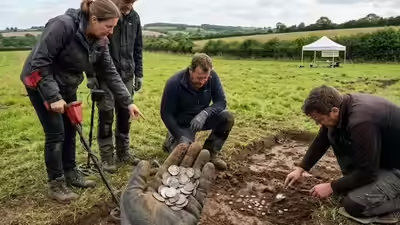
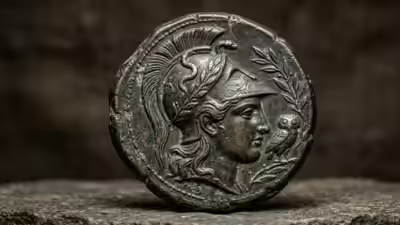
In the parish of Bickmarsh, Worcestershire, a group of metal-detecting enthusiasts found a large cache of 63 early medieval Anglo-Saxon coins. An initial report was submitted by Go Detecting (Midlands) Limited, and subsequent to that, Worcestershire Archaeology completed an extensive survey and excavation of the site. Most of the coins were minted during the reign of King Burgred of Mercia (AD 852-874) and represent a very interesting timespan in England’s history, as noted in a study published by Worcestershire County Council. Historians believe these coins were intentionally buried sometime between AD 871 and 874 to protect the treasure from invading Viking armies. The discovery of this hoard is unprecedented, as it provides archaeological evidence for the circulation of money within a defined area of England during the Anglo-Saxon period. The discovery of this currency hoard also highlights the importance of following standards and reporting regulations for archaeologists to protect and preserve Britain’s cultural heritage.
Comprising 63 silver coins, the Bickmarsh hoard is regarded as one of the most important finds of money in the history of Worcestershire. There are fewer than 100 coins recorded from Worcestershire, dating between AD 475 and 1000, before this find. The majority of the coins recovered were minted during the reign of King Burgred of Mercia and are noted in records from both Historic England and Worcestershire City Council, suggesting that they were probably deposited at the peak of the Viking threat to the Mercian kingdom.
King Burgred of Mercia ruled from AD 852 to AD 874. He faced ongoing warfare and conflict with the ‘Great Heathen Army’, which invaded England in AD 865 and continued to occupy large parts of England until AD 878. The geographical location of the burial (approximately AD 871–AD 874) corresponds with the movement of the Viking armies throughout the Midlands. The pattern of recovery of the coins suggests that the treasure might have been hidden in a layer of topsoil before subsequent agricultural activity caused the coins’ original, shallower context to be disturbed and blended with deeper topsoil.
Both professional archaeologists and amateur metal-detector enthusiasts worked together to carry out this dig. Following the first report, a geophysical survey was conducted, and then the team did a targeted excavation. While the team did not uncover any structural evidence, 35 small pieces of lead sheeting were discovered in the vicinity of the coins. Experts are investigating whether they are associated with the Bickmarsh Hoard, as some historical hoards were wrapped in lead.