April 11, 2026, 8:03 pm

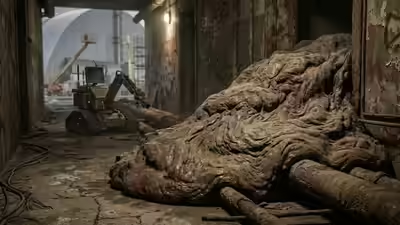
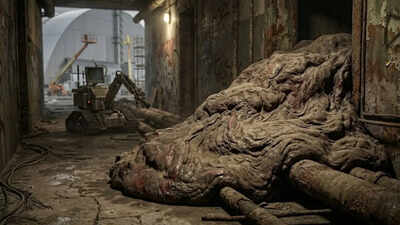
Beneath the ruins of Reactor 4 at Chornobyl, there is a hidden but very dangerous nuclear mass called the Elephant’s Foot. The mass is made of Corium, a mixture of molten lava, including uranium, zirconium, and concrete, created by the 1986 disaster. The radiation levels were so high that a five-minute exposure would have been fatal.Now that much of the radiation has decayed, it is an impenetrable relic from the nuclear age. The density of such a mass (which previously required an AK-47 to chip off), together with the danger of inhaling radioactive dust, makes moving the mass nearly impossible using the available technology. The mass is now contained within a billion-dollar steel dome and serves as a terrifying, silent reminder that it will be there for the next 300 years.
The only thing keeping this mass intact is its composition, known as corium – the material formed when the reactor core of the nuclear plant melted down and cooled to a temperature exceeding 2,000 degrees Celcius. This mass is not only made from the uranium of the fuel rods but also from the metal of the control rods and the concrete foundation of the reactor building, all of which were melted together in a vitreous ceramic-like mass. According to research published by the V.G. Khlopin Radium Institute, when the corium mass was originally formed, it was so dense that it could not be penetrated by remotely operated machines, and the only way to verify the existence of the corium mass was to fire armor-piercing rounds from a Kalashnikov rifle into the mass and use the core sampling methods permitted by the Soviet authorities. Attempts to try and dismantle the corium mass today would create millions of small, extremely radioactive hot particles that would become airborne, and they would pose an almost certain and deadly inhalation hazard to any worker near the corium mass.
In 1986, the Elephant’s Foot had an emitted radiation level of around 10000 roentgens per hour, which would provide a 50 per cent chance of death within 3 minutes. Data from the OECD Nuclear Energy Agency shows that isotopes such as Ruthenium-106 have reached negligible levels due to its short half-life; the mass itself will still provide gamma radiation exposure due to Caesium-137. By 2016, measurements at the site indicate the radiation levels are about 100 roentgens per hour; enough radiation exposure could result in severe radiation sickness within an hour. The radioactivity is not only present on the surface of the corium, but is also part of the 2000 kilograms of mass; therefore, there is no chemical remediation technique for the corium; only time and the natural half-life of the radioactive constituents can reduce its lethality.
Even in 2026, due to the extreme ionising radiation located at the lower levels of the reactor, semiconductor architectures suffer catastrophic ionising interference when exposed to the intense radiation levels within the reactor. According to reports by World Nuclear News, the New Safe Confinement (NSC) arch was designed to entomb the corium for a period of at least 100 years until a mechanical system is found to safely move or process the mass without posing a risk to the structural integrity of the building or the environment. The goal of the project is to provide ‘entombment’ until the technology to safely separate or chemically neutralise 2000 kilograms of radioactive silicate glass is created.