April 29, 2026, 4:39 pm

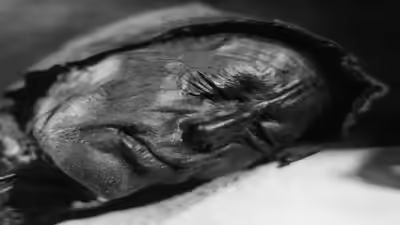
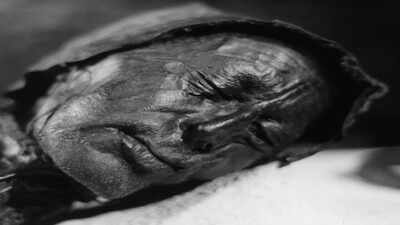
It was a rainy day on May 6, 1950, for Viggo and Emil Hojgaard. They were deep inside the Danish Bjældskovdal Bog, where the strenuous task of extracting peat blocks from the wet soil awaited them. The nation was slowly recovering from the aftermath of World War II, and peat became one of the primary sources of heat energy. In their relentless labour, they were unaware that by swinging the tool once more, they would start unravelling a 2000-year-old enigma.They lifted a layer of thick peat soil, ten feet deep in total, and then they found something that made them freeze. Lying there in the fetal position was a man with dark, leathery skin, but surprisingly enough, his face was almost perfectly preserved – you could still see his stubble and gentle wrinkles around his closed eyes. It was as if he went to sleep and never woke up. Fearing that they had found another victim of the missing people mystery in their area, the brothers contacted the Silkeborg police department, unknowingly launching one of the most important archaeological discoveries in history.The chemistry behind a natural mummyThe man who would come to be known across the world as the Tollund Man lived not in our time, but in the Iron Age, somewhere around 400 BCE. But the reason why he looks like he was discovered yesterday lies in the peculiar chemistry of the bog. According to records at the museum of Silkeborg, the bog acts as a kind of natural pickling jar, preserving skin but dissolving bones.This incredible preservation allowed scientists to peek into the final moments of a human life from the distant past with voyeuristic clarity. As detailed in the study Bogged Down: A Case Study of Tollund Man Using Bioarchaeological Techniques, the man was not a casual traveller who got lost. He was found wearing only a pointed leather cap and a belt, with a braided leather noose still tightened around his neck. This suggests that his death was likely a ritual sacrifice, perhaps a gift to the gods of the bog in exchange for a fruitful harvest or a mild winter.
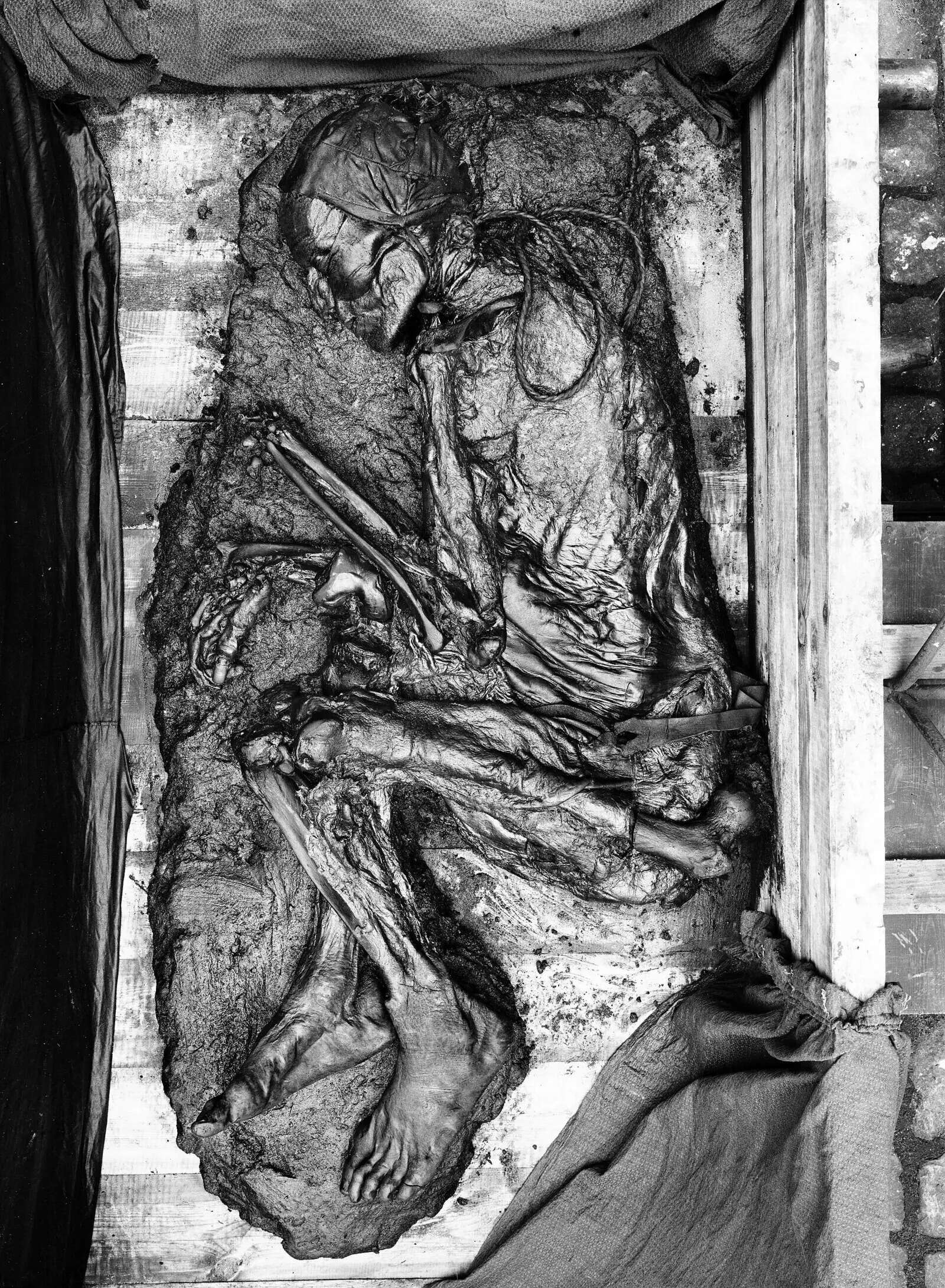
Dubbed Tollund Man, his peaceful appearance and the noose around his neck suggest ritual sacrifice, offering a profound glimpse into ancient spiritual practices and a complex relationship with nature. Image Credit: Nationalmuseet, via Wikimedia Commons
This degree of detail in examining the specimen has never been seen before. Due to the preservation of all the internal organs of Tollund Man, scientists could conduct tests on his last meal, which consisted of porridge cooked from barley, flax and other wild plants. The lack of any meat and fruits suggests that the meal was taken in late winter or early spring, at the end of supplies.Face across the agesWhy do people like to see in the image of Tollund Man not only some scientific facts but life itself? He does not look like a royal mummy with gold masks and chips of bones found in the tombs. Rather, it’s someone who seems familiar to you and whose face you know. Tollund Man has an unusual appearance for the way of death he experienced; it appears that the young man died peacefully. This first feeling of awe experienced by the brothers Hojgaard infected many people afterwards.Such a discovery has brought about a new perspective regarding the nature of the Iron Age. Typically, the period is considered disorderly and disorganised. Still, it is clear from the manner in which preparations were made for rituals that there was a strong spiritual dimension to the Iron Age community and a complex relationship with nature.Nowadays, Tollund Man has become the focus of discussions regarding humanity’s universal past. This discovery encourages people to think about the earth under their feet as a large book written in an unknown language. When building new roads, playing football on playgrounds, or collecting peat to burn, we are walking above our ancestors’ remains. Two brothers working on a regular day in 1950 could not have imagined how their daily activities would lead to an amazing discovery.